Grýla and the thirteen Yule Lads: Icelandic Christmas has an ogress and thirteen naughty sons
In Iceland, Christmas is announced by thirteen Yule Lads, one a night, sons of the troll Grýla. Their names describe each one's mischief, and the tradition has moved from fright to play.
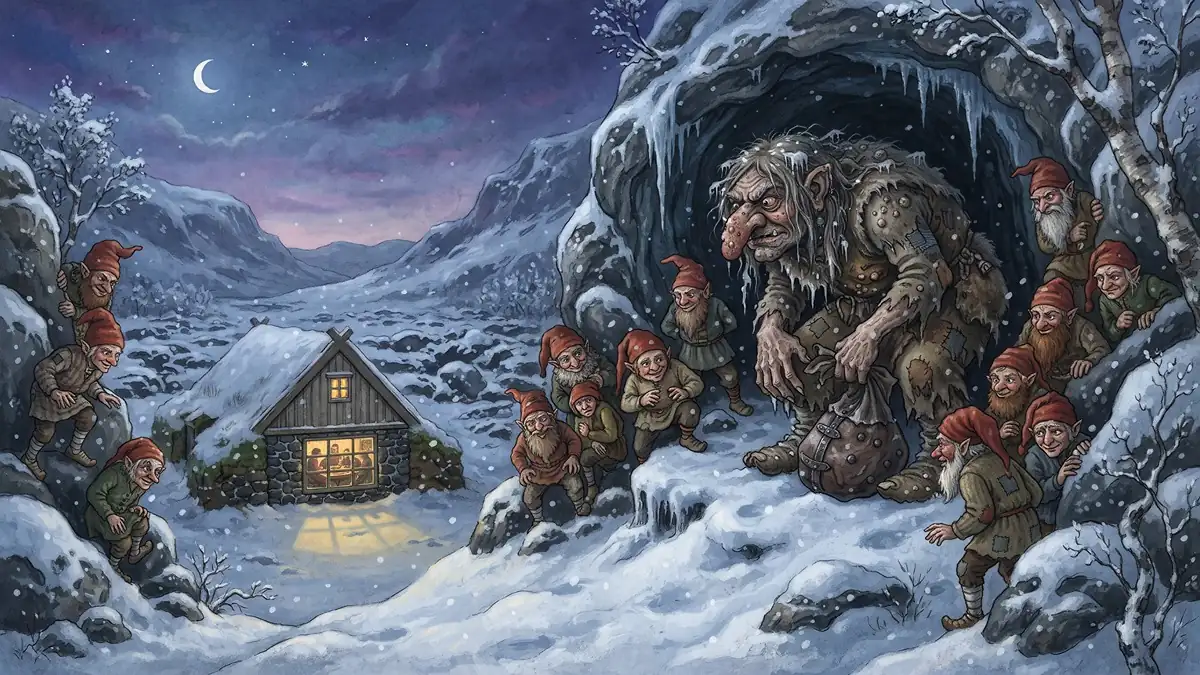
In Iceland, Christmas arrives thirteen times. From 12 December, each night one of the Jólasveinar, the “Yule Lads”, comes down from the mountains, and the last night is the 24th. They are the sons of Grýla, a troll who, according to tradition, comes down to fetch badly behaved children and take them to her cauldron.
Who Grýla is
The name Grýla already appears in medieval Icelandic texts, as a troll woman. Only later did she take on the role of mother of the Yule Lads and ogress of Christmas. Tradition describes her as ugly, with a big nose, and married to Leppalúði, a lazy husband. The family also includes the Jólakötturinn, the Yule Cat, which, says the folklore, devours anyone who did not get new clothes before Christmas.
The thirteen
Each son has a name that tells his habit, and the lists vary a little from region to region. Among the best known are Stekkjastaur, who harasses the sheep, and Giljagaur, who steals the froth from milk. Stúfur is the short one, Þvörusleikir licks wooden spoons and Pottaskefill scrapes the pots. Askasleikir licks bowls, Hurðaskellir slams doors, Skyrgámur gobbles the skyr, Bjúgnakrækir steals sausages and Gluggagægir peeps through windows. Gáttaþefur sniffs out the smell of fried bread with his big nose, Ketkrókur fishes for meat with a hook and Kertasníkir, the last, steals candles. After Christmas they leave, one a night, in the same order.
From fright to play
For a long time, parents used Grýla and her sons to frighten children. An order of 1746, in force in Iceland under Danish rule, banned the custom. In the 20th century, writers such as Jóhannes úr Kötlum, in poems of 1932, showed the Yule Lads as figures more funny than dangerous. Today they are relatives of the image of Santa Claus: children leave a shoe in the window and, the next morning, find a small gift or, if they were naughty, a potato.
The season of the Yule Lads runs from 12 December to Epiphany, on 6 January, which makes thirteen nights of arrival and thirteen of departure. Today they appear on posters, in shop windows and in the drawings of Icelandic children. Grýla is rarer to see, but she is still present in songs and in family stories, and many people remember hearing her name in childhood.
To protect the pantry through the thirteen nights, play The thirteen Yule Lads.
Sources.
- Icelandic folklore on Grýla, Leppalúði and the Yule Lads, recorded in story collections
- References to Grýla in medieval Icelandic texts, including the verse lists linked to the Prose Edda
- Jóhannes úr Kötlum, Christmas poems published in 1932