Gudrún and her four husbands: the most intriguing woman of the Laxdæla saga
In the Laxdæla saga, Gudrún Ósvífrsdóttir marries four times, loves the wrong man and leaves a line about love that scholars have debated for centuries.
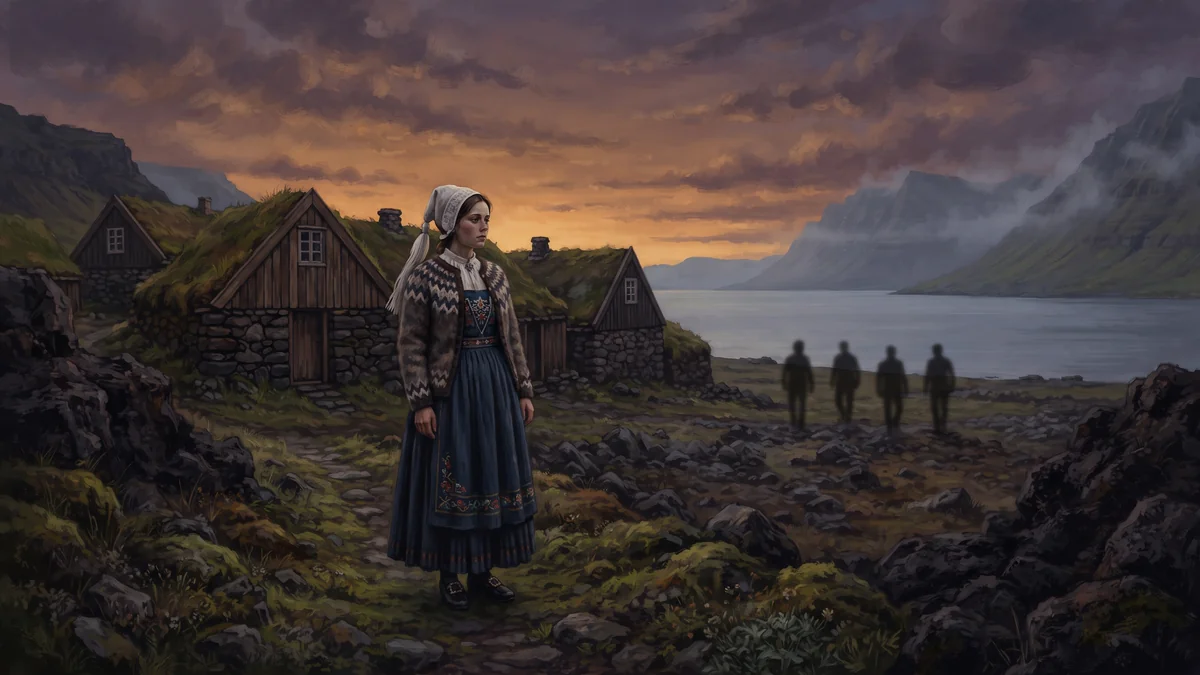
The Laxdæla saga is one of the great Icelandic sagas, written in the 13th century, and it tells what happened across several generations in a region of western Iceland. At the centre of its second half is a woman, Guðrún Ósvífrsdóttir, described as the most beautiful, the cleverest and the most ambitious of her time. She is also one of the most discussed female characters in medieval literature.
The four marriages
The first husband was Þorvaldr Halldórsson, whom Gudrún married young, without much will. The marriage ended in separation. The second was Þórðr Ingunnarson, and the saga says he drowned. The third, Bolli Þorleiksson, is the one who weighs most in the story. The fourth was Þorkell Eyjólfsson, who also drowned, in an accident at sea.
The order matters because each husband changes what comes next. Gudrún outlives all of them except the first, from whom she separates, and each loss makes her harder.
The triangle with Kjartan and Bolli
The central drama involves two cousins raised together, Kjartan Óláfsson and Bolli Þorleiksson. Gudrún preferred Kjartan, and the saga suggests they loved each other. But Kjartan travels to Norway and spends time at the court of King Olaf Tryggvason. Bolli, who accompanied him, returns first and spreads the rumour that Kjartan was interested in the king’s sister, Ingibjörg. Gudrún, hurt, marries Bolli.
From there the narrative moves toward a tragic end. Bolli ends up killing Kjartan, and Kjartan’s kin, in turn, kill Bolli. Gudrún, pregnant at the time, is widowed for the third time and later marries one last time.
The final line
Already old, Gudrún is asked by her son Bolli Bollason which man she loved most. She answers that the one she treated worst was the one she loved most. The line is famous because the saga does not explain whom it refers to, and scholars disagree: some understand she spoke of Kjartan, others of Bolli. The ambiguity is part of the effect.
The saga also says that in old age she learned the Psalter and became very devout, and that she was buried at Helgafell. The source gives no clear statement that she became a nun or an anchoress, and it is prudent not to claim it.
How to read a saga
The Icelandic sagas are prose texts by anonymous authors, written centuries after the events they tell. The Laxdæla saga mixes events that seem historical with clearly literary scenes, such as the prophetic dreams around Gudrún, and it is not possible to separate with certainty what happened from what was composed. Still, it gives a rare portrait of a woman who acts, decides and bears the consequences.
To test your memory of Gudrún’s husbands, play Gudrún’s dreams.
Sources.
- Laxdæla saga (Saga of the People of Laxardal)
- Entries in Icelandic encyclopedias and museums on the Laxdæla saga
- Academic editions and studies on Guðrún Ósvífrsdóttir