The Rök Stone: the longest runic inscription in the world and the secrets it still keeps
With 725 runes, the 9th-century Swedish stone is the longest known runic text. A father raised it for his dead son, and scholars still debate what else it says.
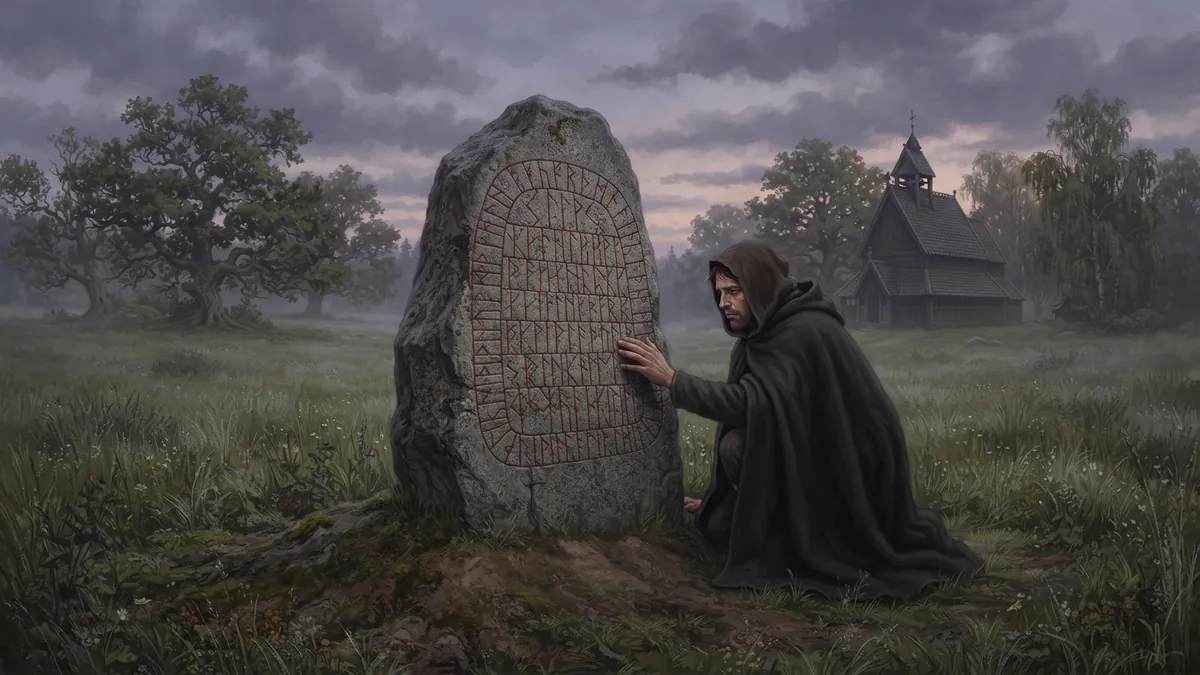
Among the rune stones of Scandinavia, none compares to Rök. It stands in the region of Östergötland in Sweden, and is considered the longest known runic inscription, with about 725 runes. It was carved in the 9th century, although the sources do not give the exact year.
A stone for a son
The inscription opens with the reason for the stone: it was composed by a man called Varin, in memory of his dead son Vämod. The carving is attributed to Sibbi. A memorial stone would be common, but this one goes far beyond the usual size of a gravestone.
The text
The text has passages in prose and in verse, and is believed to contain secret formulas and epic verses. One stanza, according to scholars, seems to refer to Theodoric the Great, king of the Ostrogoths, a legendary figure in the Germanic world. Some passages are in cipher, written with runes of the older futhark instead of the younger futhark used in the rest of the text. That requires the reader to know both scripts.
This does not mean the text is a solved puzzle or that its answers are known. Researchers continue to interpret passages, and many readings are provisional.
The alphabet
The alphabet used on most of the stone is the younger futhark, with sixteen runes, and the name comes from the first six: ᚠ f, ᚢ u, ᚦ þ, ᚬ o, ᚱ r, ᚴ k. The others include ᚼ h, ᚾ n, ᛁ i, ᛅ a, ᛋ s, ᛏ t, ᛒ b, ᛘ m, ᛚ l and ᛦ R. Each rune is a sound and also a symbol with its own name, and so reading an inscription is never just decoding letters.
Why it matters
The Rök stone is one of the rare written sources from the Viking Age itself, and not from authors centuries later. It shows that in the 9th century there were people in Sweden able to compose a long, ciphered text and carve it in stone, and that these people were interested in old stories and in heroes of the Germanic world.
That is why it is visited and studied to this day, and anyone approaching the subject soon sees that the stone asks more questions than it answers.
Where the stone stands
The stone stands beside the church of Rök, in Östergötland, and is one of the oldest attractions of the region. It is more than two metres tall and carries inscriptions on almost every face, including the top. So anyone reading it has to walk around it, and the text does not follow one simple line of reading. Part of the scholars’ difficulty comes from exactly this layout and from centuries of wear in the open air.
To try carving a few words in runes, play Decode the Rök Stone.
Sources.
- Britannica, entry Rök runestone
- Academic studies on the Rök inscription and the runic cipher
- Entries in Swedish museums and encyclopedias