Draugen: the sea ghost Norwegian fishermen feared to see
In the tradition of the Norwegian coast, the draug is the spirit of a drowned man without a grave who appears in the fog and foretells deaths. The accounts were collected by folklorists in the 19th century.
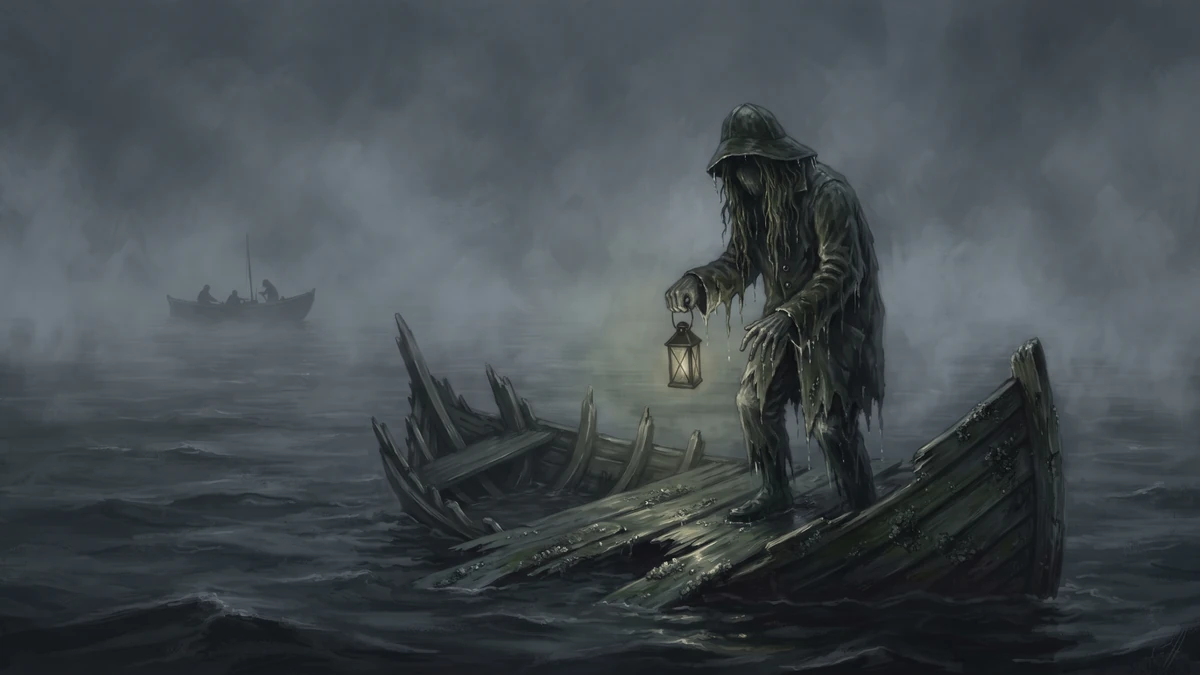
On the coasts of Norway, where the sea has always claimed victims, popular imagination created a figure for the fear of those who go out in boats. They call it the draug, or Draugen, and say it is the spirit of a drowned man.
Who the draug is
In the stories, the draug is a man who drowned and did not receive a Christian burial. Without rest, he wanders the sea. In many accounts he appears in soaked fisherman’s clothes, with seaweed on his body and a pale face. Many say he shouts or weeps, and that the sound carries through the fog.
A traditional image is of the draug sitting in a boat broken in half, known as a halvbåt or half-boat. Whoever sees this boat, according to the stories, sees an omen of disaster.
Omen
The draug rarely attacks. In many accounts his role is to warn. Seeing the draug at sea, hearing his cry or finding signs of his boat could mean someone would die in the following days. That is why fishermen feared him.
In some versions he drags boats to the bottom, or capsizes the vessel of whoever meets him. Accounts vary by region, and there are many local stories, above all in northern Norway, where fishing on the open sea was more dangerous.
A headless figure?
In some modern descriptions the draug appears headless. This, however, does not come from the old collections. In the folklore sources, the draug usually has a head, although the face is covered with seaweed or shadows. It is an example of how a traditional figure changes in retelling.
Protections
As in many maritime traditions, there were precautions to avoid the meeting. Fishermen avoided certain words at sea and observed prohibitions, such as not speaking of things associated with death. In some regions something was thrown into the sea to drive the draug away. These customs vary, and there is no single list.
Why the story survived
The draug grew out of a real situation. Fishing was vital and dangerous, families lost fathers and sons, and many bodies were never recovered. The figure of the restless drowned man gives shape to an anxiety everyone shared. The story also tied the sea to religion: the unburied dead do not rest.
Today the draug appears in children’s books, in games and even in contemporary art. But for the fishermen of old, the fog one must not answer was a serious matter.
To cross the fog without meeting Draugen, play The fog of the Draug.
Sources.
- 19th-century collections of Norwegian folklore, such as those of Peter Christen Asbjørnsen and Rikard Berge
- Encyclopedia entries and Norwegian maritime museums on the draug
- Studies on maritime beliefs of the Norwegian coast