The Ulfberht swords: the name engraved on Viking blades and the steel mystery
About 170 medieval swords bear the name VLFBERHT. Studies point to rare-quality steel in some blades and signs of imitation in others.
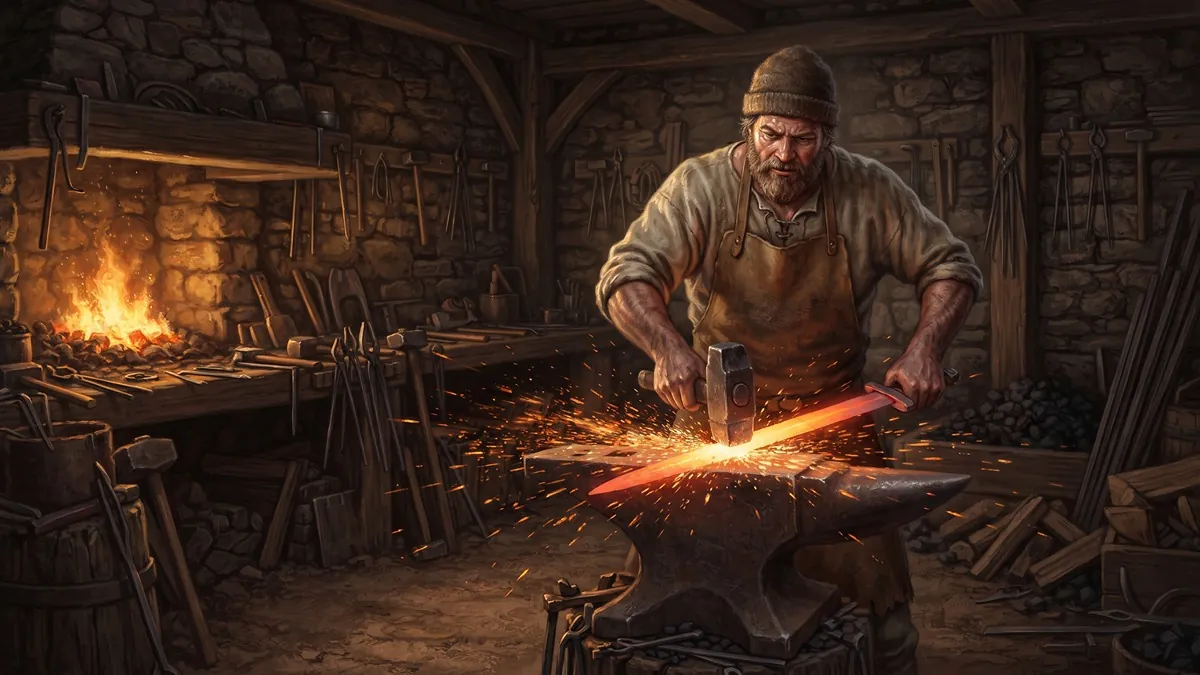
Between the 9th and 11th centuries, swords with the inscription +VLFBERH+T or +VLFBERHT+ engraved on the blade ended up in Scandinavia, Finland, Germany and elsewhere in Europe. About 170 of them are known today, and since the 20th century researchers have tried to understand who made them, where the steel came from and why the name keeps repeating.
What is written on the blade
The inscription appears in two main forms, with crosses marking the beginning and end or separating the letters. Ulfberht, or Wulfberht, was a Frankish personal name, common between the 8th and 10th centuries. For that reason most specialists believe the swords came from the Frankish world, probably from the Rhine region. It is a deduction made mainly from the name, because no workshop has been found.
It is not clear whether Ulfberht was one person, a family of smiths or just a brand. The inscription may indicate a type of sword rather than an individual maker.
The steel that intrigued metallurgists
Metallurgical analyses, such as those by the Briton Alan Williams, showed that some of these blades have steel with more carbon and fewer impurities than ordinary swords of the time. This type of steel, called crucible steel, was produced mainly in Central Asia and Persia, and some argue that ingots of it reached Europe along trade routes that crossed present-day Russia. More recent research, such as that of Ingo Petri, discusses the origin of the material, and the debate continues.
Importantly, not all Ulfberht swords have this steel. Many use ordinary iron and steel, and crucible steel appears mainly in blades made after the year 1000.
Copies and mistakes
Some inscriptions have spelling mistakes or swapped letters. The researcher Anne Stalsberg suggested this may come from smiths who copied the mark without being able to read, and some see in these blades imitations of a prestigious brand. It is an interpretation, not proof.
How the swords reached the Vikings
Carolingian capitularies forbade selling weapons to foreigners, and an edict of 864, at Pîtres, repeated the ban for the Northmen. This suggests Ulfberht swords may have arrived through plunder, ransom or smuggling rather than open trade. Here too these are hypotheses.
A prestige weapon
Swords of this type were expensive and a symbol of status. They generally had two edges, a blade of about 80 to 90 centimeters and a weight of a little over a kilogram, and many have been found in graves and riverbeds. An Ulfberht sword of exceptional steel was therefore not the common equipment of a warrior but a rare possession passed from hand to hand.
To forge an Ulfberht blade strike by strike, play The Ulfberht blade.
Sources.
- Anne Stalsberg, study on the production and distribution of Ulfberht swords, *Zeitschrift für Archäologie des Mittelalters* (2008)
- Alan Williams, *The Sword and the Crucible* (Brill, 2012)
- Ingo Petri, "VLFBERHT swords: origin, material, and manufacture", *History Compass* (2019)